Sessions The Society of AI Explorers

We’re the ones with twenty ideas that we wish we had time to dig into with AI. The pull of so many possibilities, though, makes it unclear where to put our time or even how to start, plus we’re doing it all alone. The Society of AI Explorers gives us the base camp that we need for our adventures. We’re brought together by the thrill of the hunt, the love of the game, as we strive to make AI do backflips and dance to our tune.

The Society’s virtual one-hour sessions are a space to share what has our attention, trade tactics, pull it all apart together to understand and riff on it, and then adapt it to our own situations and interests. They reserve time for discovery and give us a community of fellow explorers to energize, inspire, and double-check us. The Society makes AI exploration thrilling, fascinating, and even delightfully playful. Seth hosts as facilitator, thought partner, and experienced guide.

You may be charging forward right now, deep in the flow, or feel like a beginner who’s just scratching the surface without a clear sense of what’s wise, powerful, and interesting to do next. That’s fine: each one of us keeps returning to that moment of curiously approaching our own newest hill to climb.

Some sessions will repeat monthly. Seth will replace or revise others based on the level of interest and the latest topics worth discussing. He’ll email each month’s schedule, and you register here.
Sessions

Each session is a one-hour Zoom conversation that Seth facilitates, not a webinar or class.

Top ways people participate

See two participants' stories
  1. Get the group's input on a topic that you're wondering about

  2. Get our tactical and strategic advice on something you're trying to do or have been toying with (show-and-tell welcome!)

  3. Come with no agenda, just eagerness to see what comes out of volleying ideas and experiments with other smart, curious AI explorers

November

2Nov
Monday

Solo owners of vibe-coded apps

4–5 pm Eastern

You built a thing. It works (mostly, it could be better, but maybe later). Now what? Hosting, domains, keeping it running, considering feedback, determining who should be using it, promoting it... the list goes on and on. Building the app turns out to have opened more questions than it answered. This is a group for people who have one of these out in the world, or are just about to, and are working out all the rest of it as they go.

Register→
5Nov
Thursday

Owners of a Claude Code 'Second Brain'

1:30–2:30 pm Eastern

With Claude Code pointed at a folder of documents, plus connectors set up to give it access to other systems, you've built yourself a thinking partner that learns about you and can do work for you. For folks who have a 'Second Brain', 'Chief of Staff', or whatever you might call it, we have so many ideas and tactics to share. What instructions have you put in CLAUDE.md? What Skills have you made? What files do you have and how do you rely on Claude's Memory feature? What kinds of conversations are you having with it? And on and on. This is a roundtable for folks looking to push the frontier of what their system is capable of, by discovering what other folks are doing with theirs.

Register→
6Nov
Friday

Deepen self-understanding with AI

Noon–1 pm Eastern

One way to start is just with any call transcript: “What do you notice about how I showed up on this call versus how the others did, or how someone else might've?” There are a thousand ways into yourself with AI, which is both a blessing and paralyzing. This group is for people who are on that time-honored journey into understanding their own mind, whether they've been using AI or are curious to add AI to their toolbox. Let's find our own individual ways, together.

Register→
9Nov
Monday

Solo AI advisors, consultants, and coaches

1–2 pm Eastern

Working solo means there's nobody down the hall to ask "wait, am I doing this right?" In AI advisory work, where the ground is always moving, that's a major disadvantage. How are you pricing this? What do you do when a client wants a thing that AI can't actually do? What are you building for yourself versus for them? Which tools have you committed to, and which have you abandoned? Let's compare notes with the colleagues we don't otherwise have.

Register→
11Nov
Wednesday

For Beginners: Growing your 'Second Brain' from the ground up

Noon–1 pm Eastern

How many people do you have in your life who you never have to explain yourself to, because they know you so well that they just understand, no questions asked?

How many of them would spend all the time in the world unpacking and working on whatever's on your mind, bringing none of their own baggage or priorities into the conversation? They'll also flag when you're falling victim to your habit of overthinking, or underselling yourself, or never asking for help, or whatever's your pitfall of choice.

Plus, you've given them logins to your email, your calendar, and wherever else you do work and store information. Which means they catch the things you'd have wanted to know but would have missed: one call transcript, and they see the four things that you would want to happen. You can even give them logins to software where you've never worked but wish that you had, and thankfully they are a total expert in every feature and best practice, and they can just take care of everything for you. And if just the right system doesn't exist, they will build one for you from scratch.

This is life with a 'Second Brain' set up in Claude Code or in ChatGPT Codex. There's no code involved, fear not. It starts with a folder. You put things in it (call transcripts, project notes, a description of what your boss cares about), and you start having conversations with it about yourself. That's what we do together in this interactive, collaborative hour. We'll plant a seed, and Seth will show you how to foster its growth.

Register→
12Nov
Thursday

Holding a wise relationship with AI

1–2 pm Eastern

Feelings that may be familiar:

  • Mental burnout from juggling 5 parallel AI sessions
  • The sense of urgency to keep doing more and more, like a book where you keep saying, “Just one more chapter before bed”
  • Wariness that AI is leading you astray by giving you false confidence and poor advice
  • Fear that you're about to do something stupid because AI isn't flagging what you didn't think to ask
  • Skepticism that AI has all the information that it needs to make smart judgments
  • FOMO about what everyone else seems to be doing with AI
  • Uncertainty about whether the thinking is yours, or where your value is, now
  • Self-doubt: Is AI failing because it's stupid or because I am?
  • Am I alone in this experience? No one in my life “gets it.”

Feelings like these are real, common, and disruptive. Let's get together to find the wise ways to address them, and develop a partnership with AI that lifts us up without dragging us down.

Register→
17Nov
Tuesday

Stoke your best thinking and curiosity, using AI

1–2 pm Eastern

AI can be aggravatingly mediocre at thinking for you or suggesting movies/books/podcasts/research/ideas that would actually set your mind afire (in a good way). Instead, you can use it to rile up your own thinking and inquisitiveness (two things your mind is inherently built for). You end up with results that feel like they're entirely yours and like you could never have produced them on your own. You produce thinking of the highest quality that sparkles with inspiration. This session is a place to practice this live, learn what works well, and even start to develop a playbook for it.

Register→
19Nov
Thursday

Owners of a Claude Code 'Second Brain'

1:30–2:30 pm Eastern

With Claude Code pointed at a folder of documents, plus connectors set up to give it access to other systems, you've built yourself a thinking partner that learns about you and can do work for you. For folks who have a 'Second Brain', 'Chief of Staff', or whatever you might call it, we have so many ideas and tactics to share. What instructions have you put in CLAUDE.md? What Skills have you made? What files do you have and how do you rely on Claude's Memory feature? What kinds of conversations are you having with it? And on and on. This is a roundtable for folks looking to push the frontier of what their system is capable of, by discovering what other folks are doing with theirs.

Register→
20Nov
Friday

AI for joy, play, and creativity

Noon–1 pm Eastern

AI can be hilarious (often accidentally), be a tireless play buddy, spark our creativity, and let us create things we never dreamed that we'd be able to. Let's inspire each other with how we're using AI to just mess around and see what happens. Play predictably leads to discovery and learning that we never could have predicted, and it's such a shame to play alone.

Register→

Membership in the Society of AI Explorers

Register for as many sessions as you like. If you attend more than you're paying for, Seth will ask you to bump up your membership. See below to sign up for the monthly email with the upcoming schedule.

Guest · free

Join any one session each month.

Partial Membership · $24 a month

Join any two sessions each month.

Sign Up→

Full Membership · $100 a month

Your all-access pass: attend as many sessions as you'd like, plus receive high-level notes from the ones you couldn't make, plus join an email group ("listserv") for full members only, launching in November.

Sign Up→

For your team

Get memberships for your team to join these sessions alongside the broader Society. Or Seth can run facilitated conversations just like these, just for your team.

Let's talk: [email protected]

The mailing list

Sign up for Seth's monthly schedule and reflections.

This is how you'll hear about the coming month's sessions so you can register, plus you'll get Seth's reflections on the prior month's conversations and about the big questions that AI's latest developments have him chewing on at the moment.

Getting to the frontier

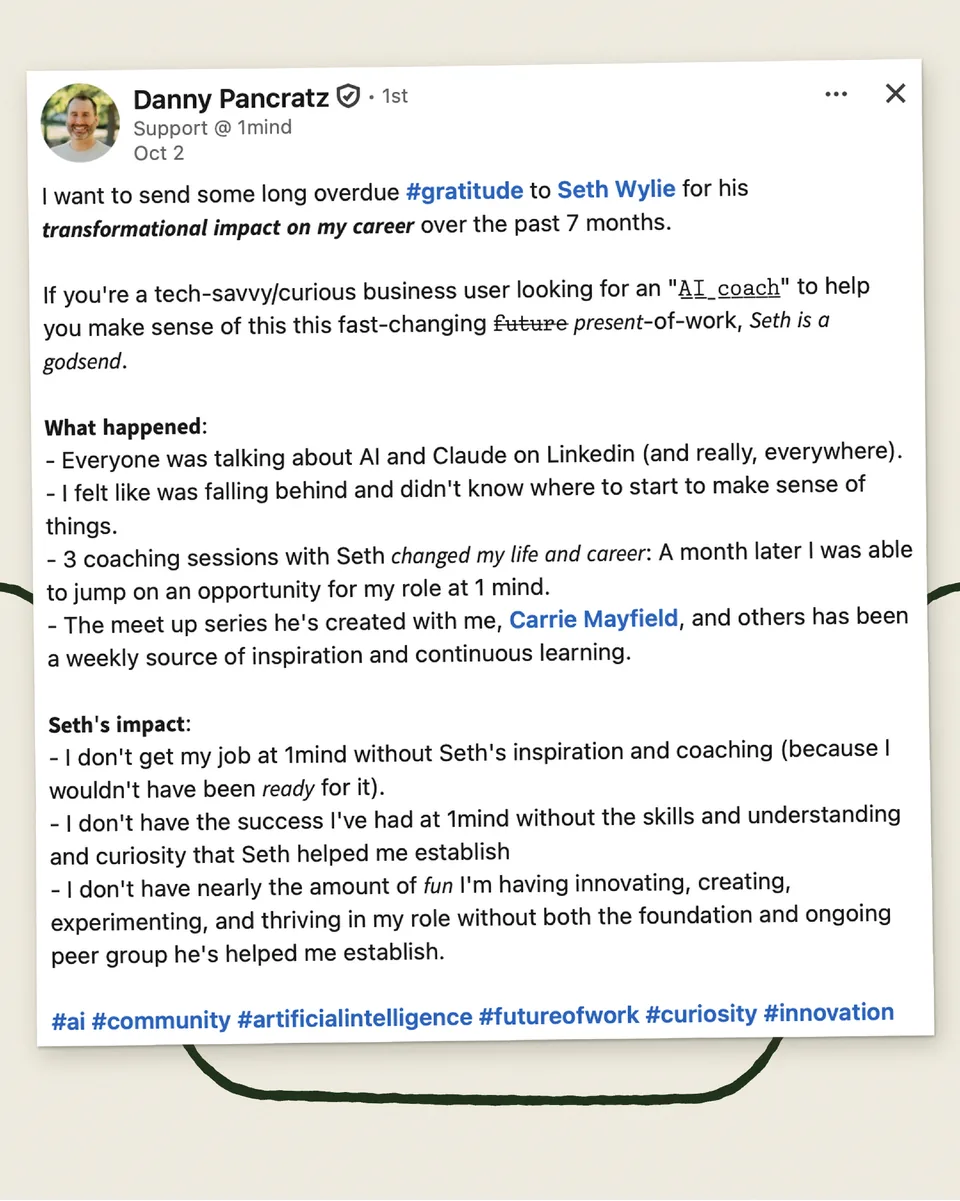
Two early and committed participants in Seth's sessions are Danny Pancratz, who runs a support team, and Carrie Mayfield, who runs her own consulting firm.

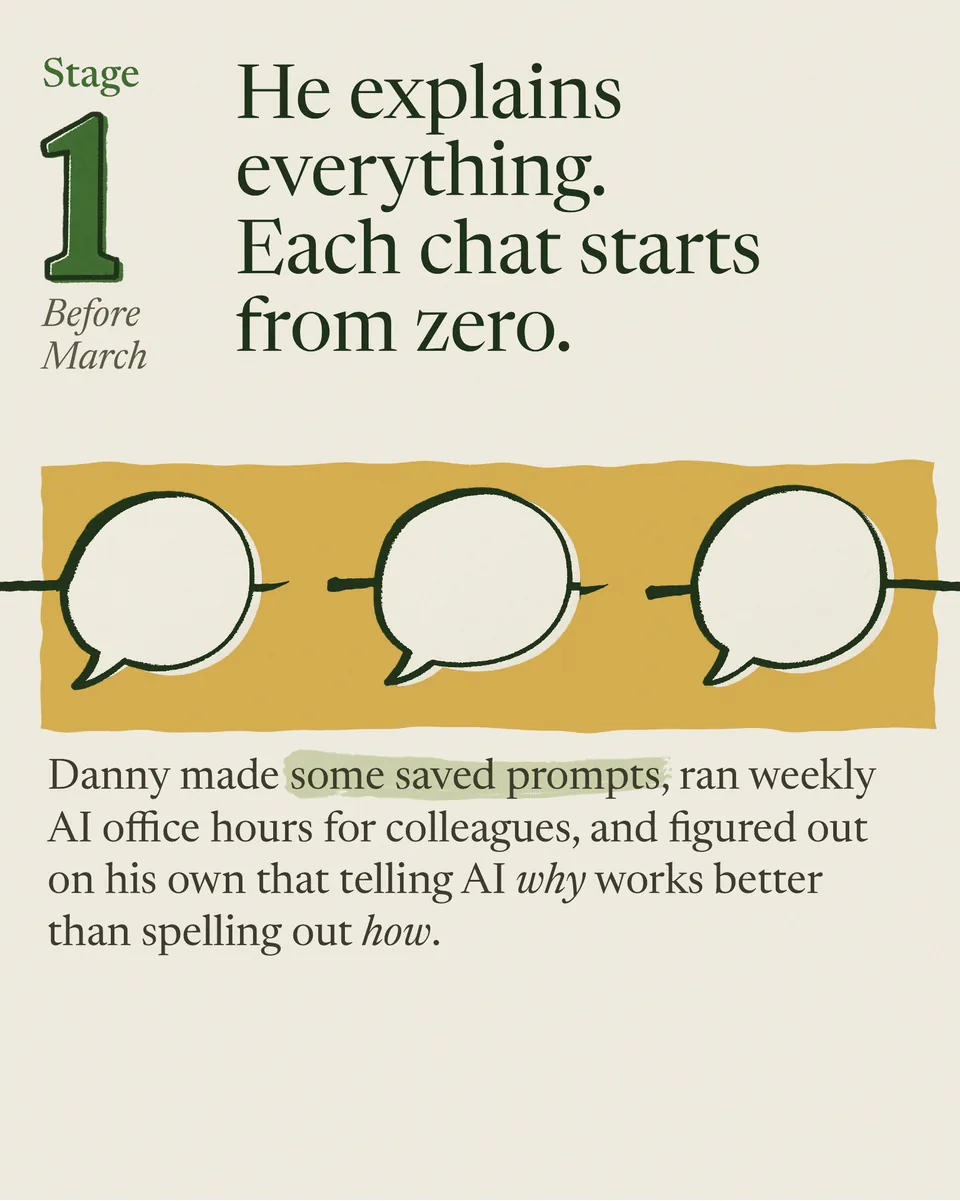
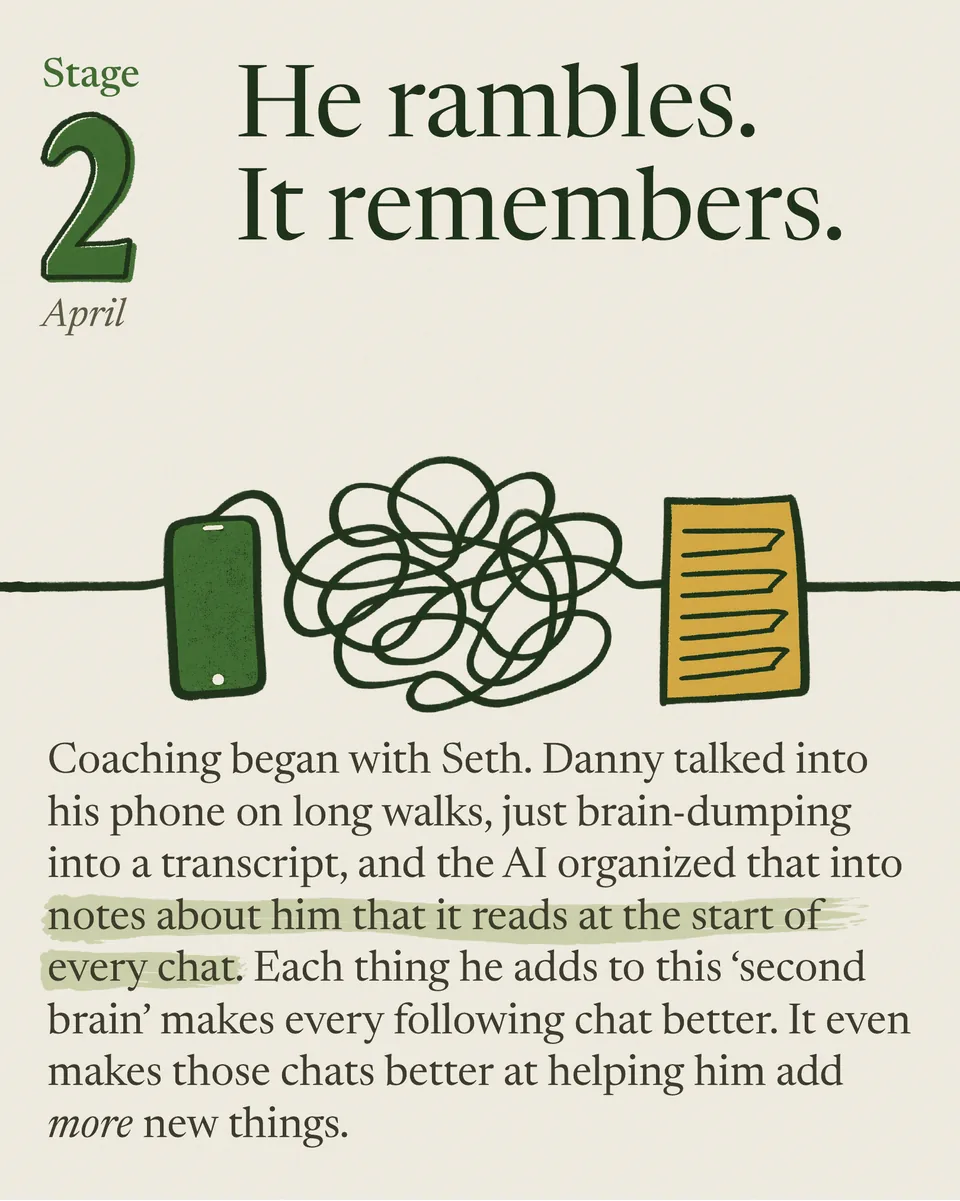
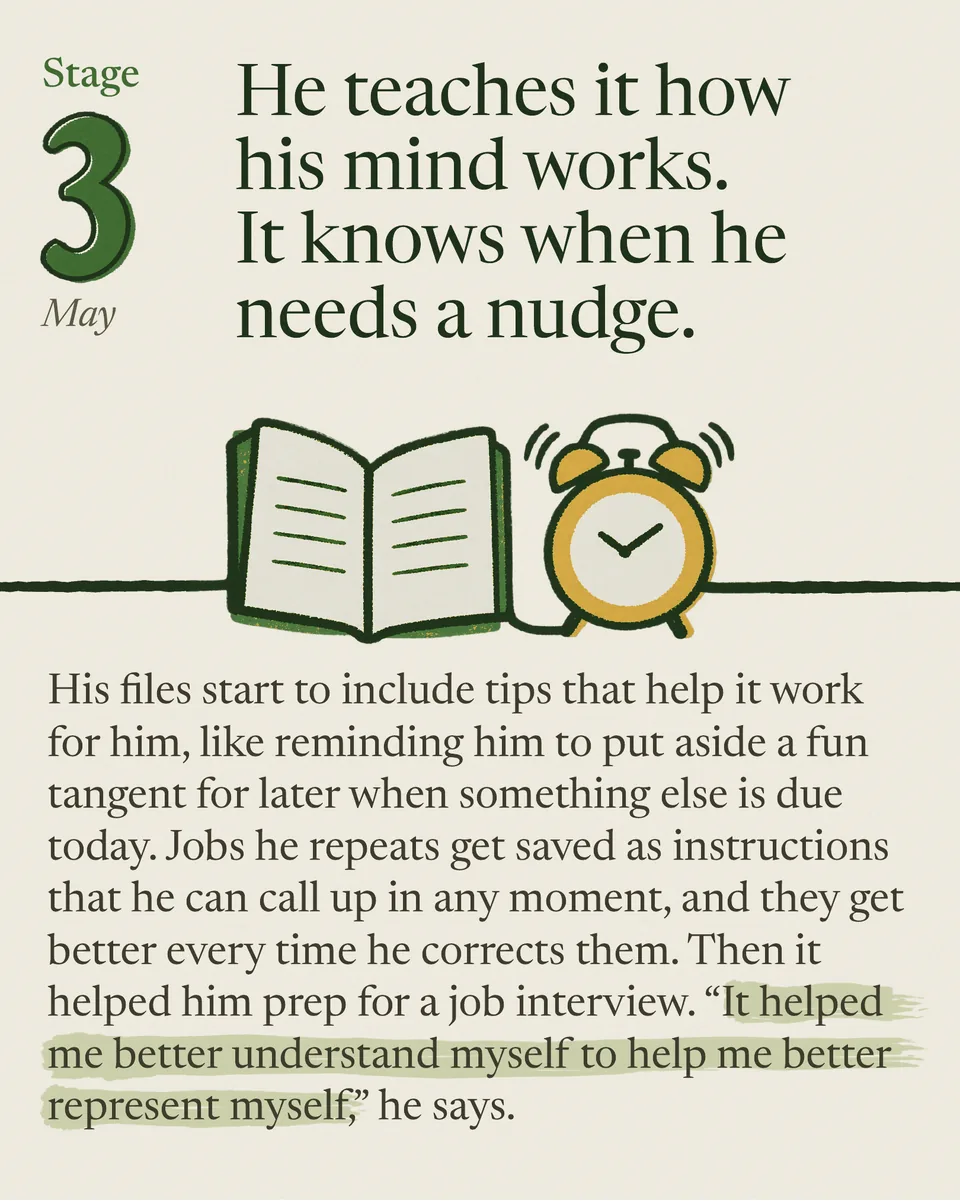
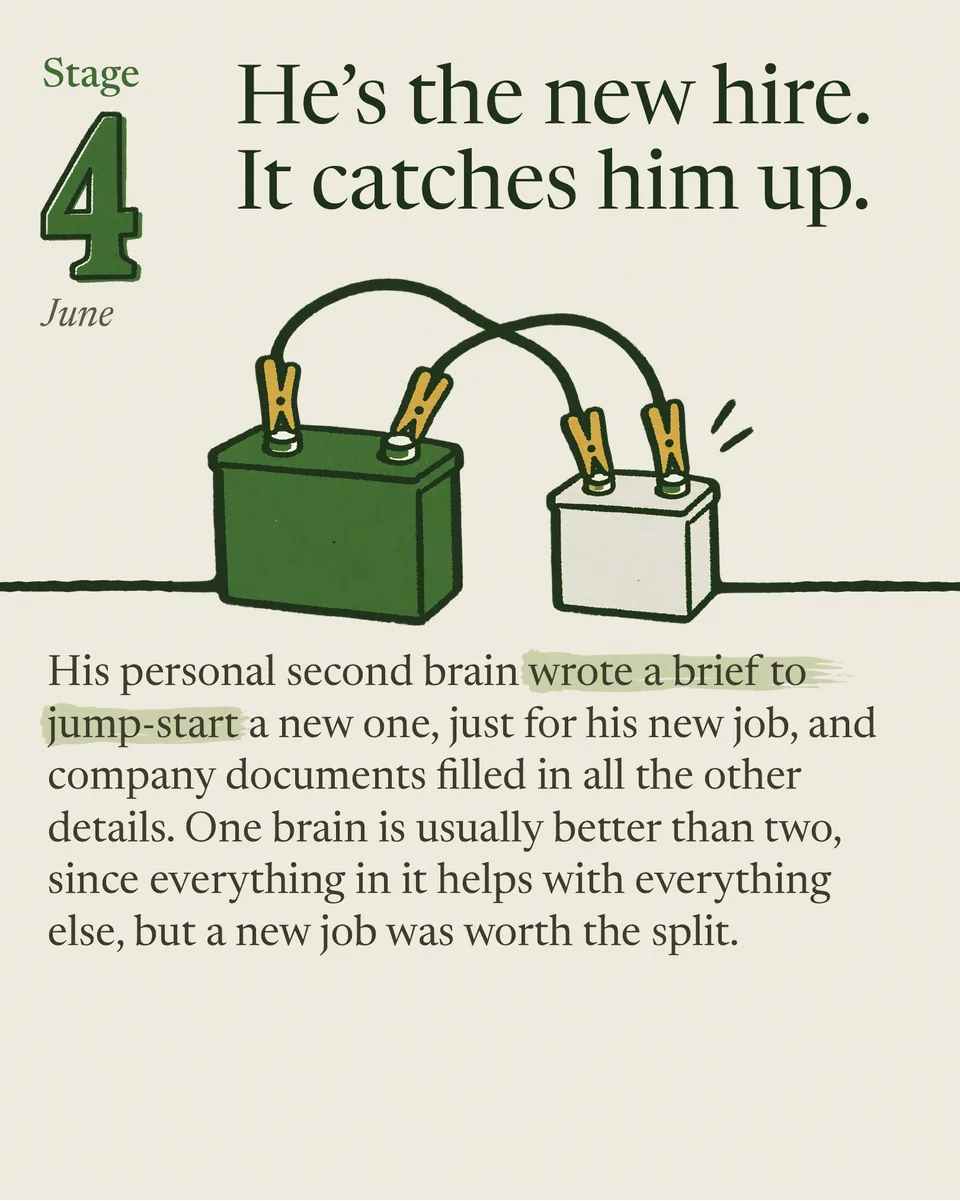
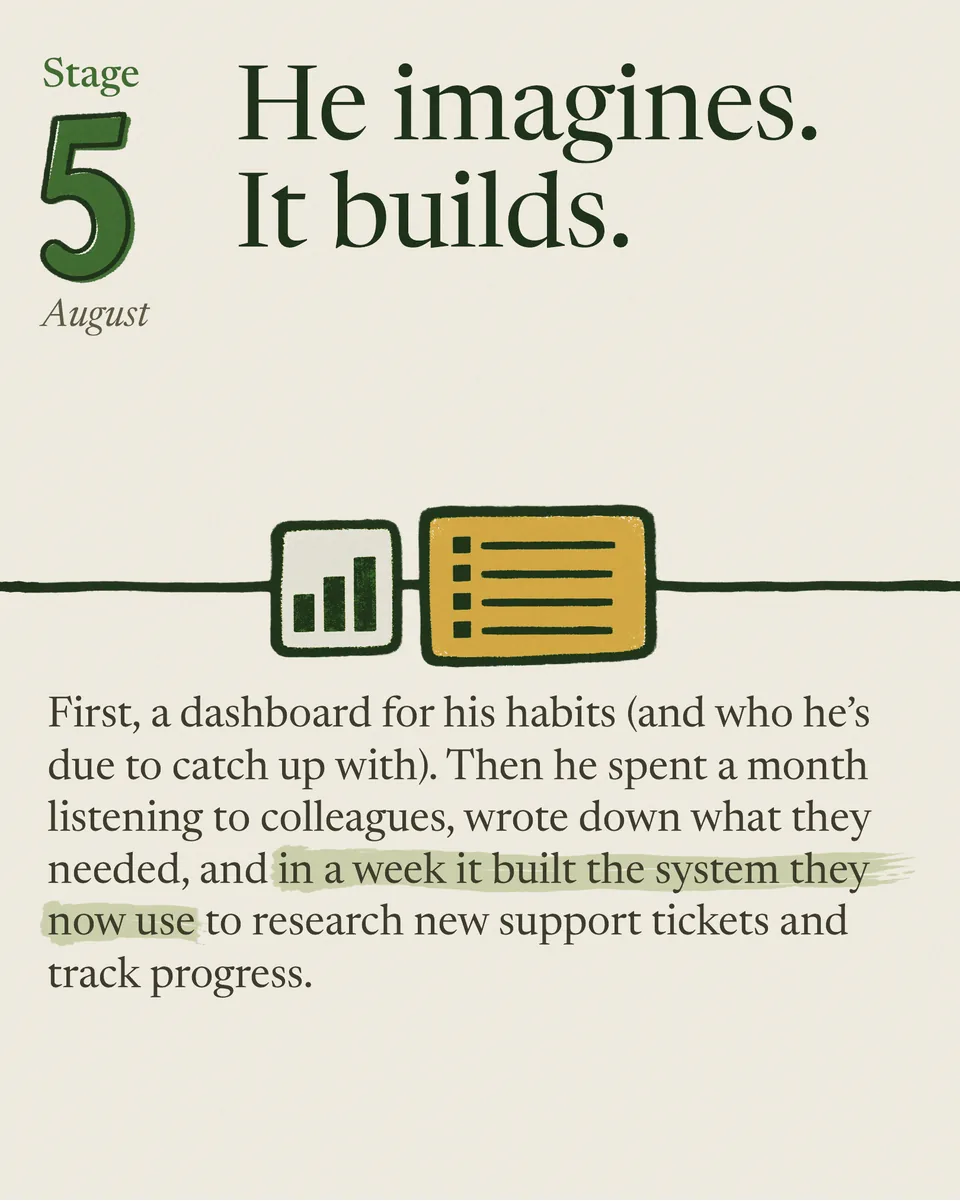
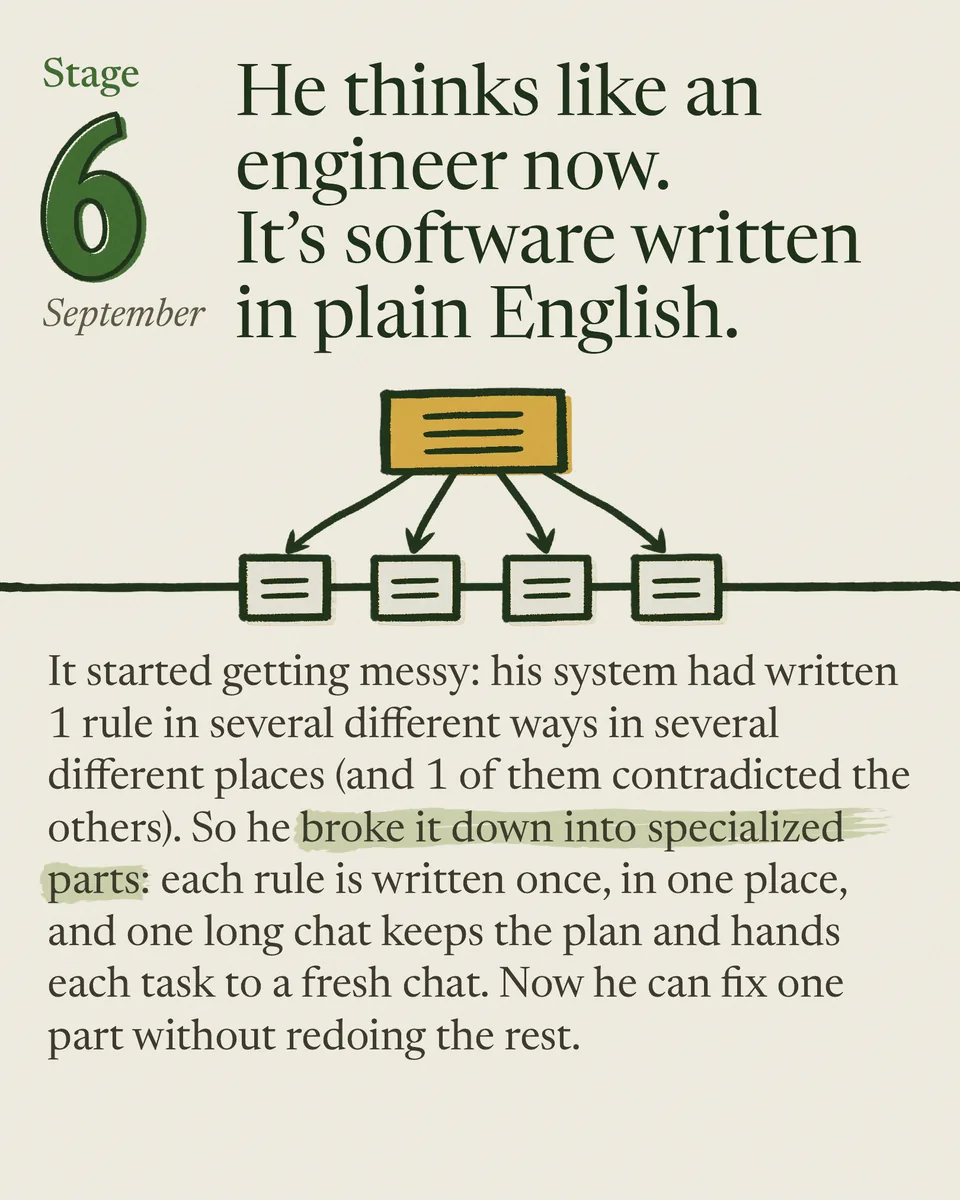
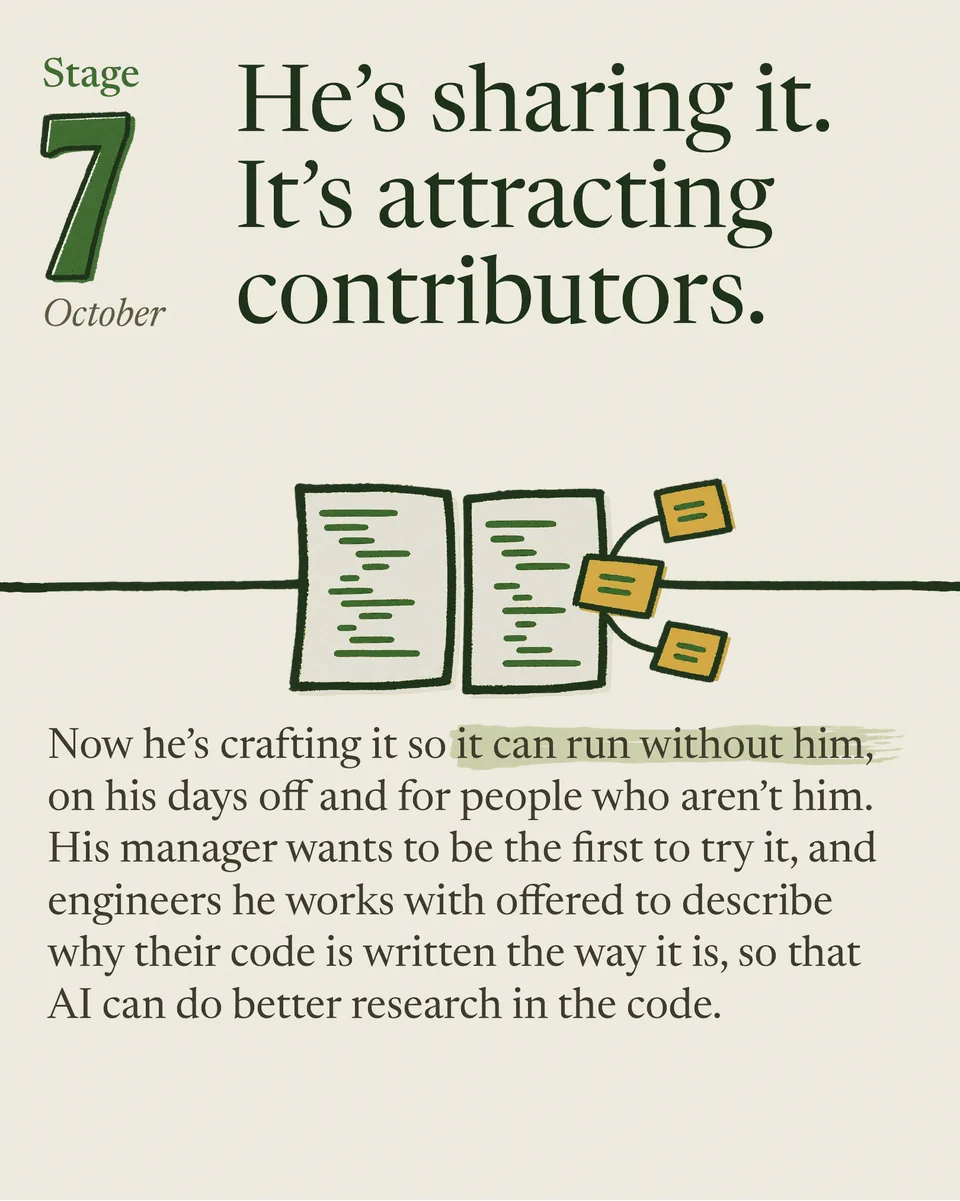
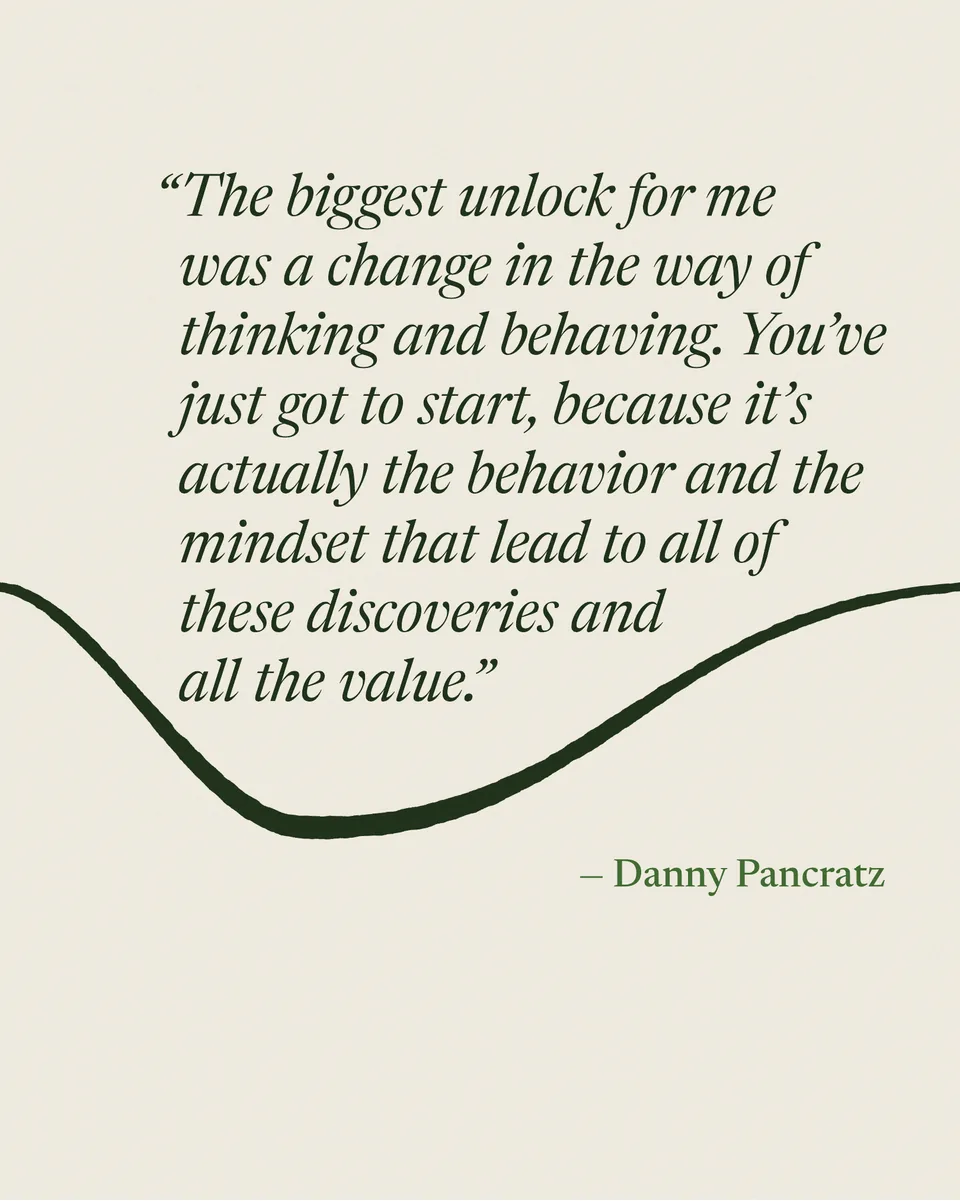
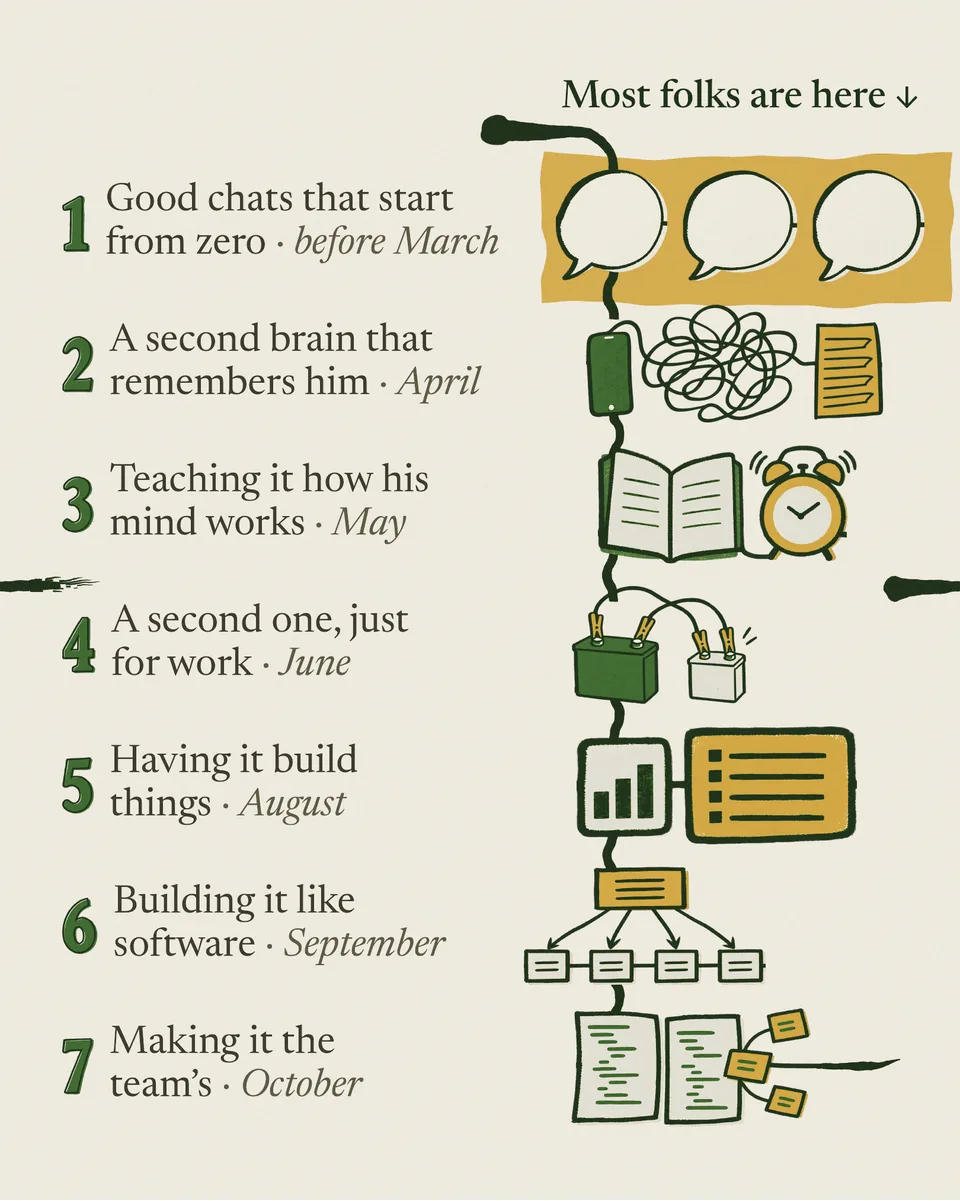
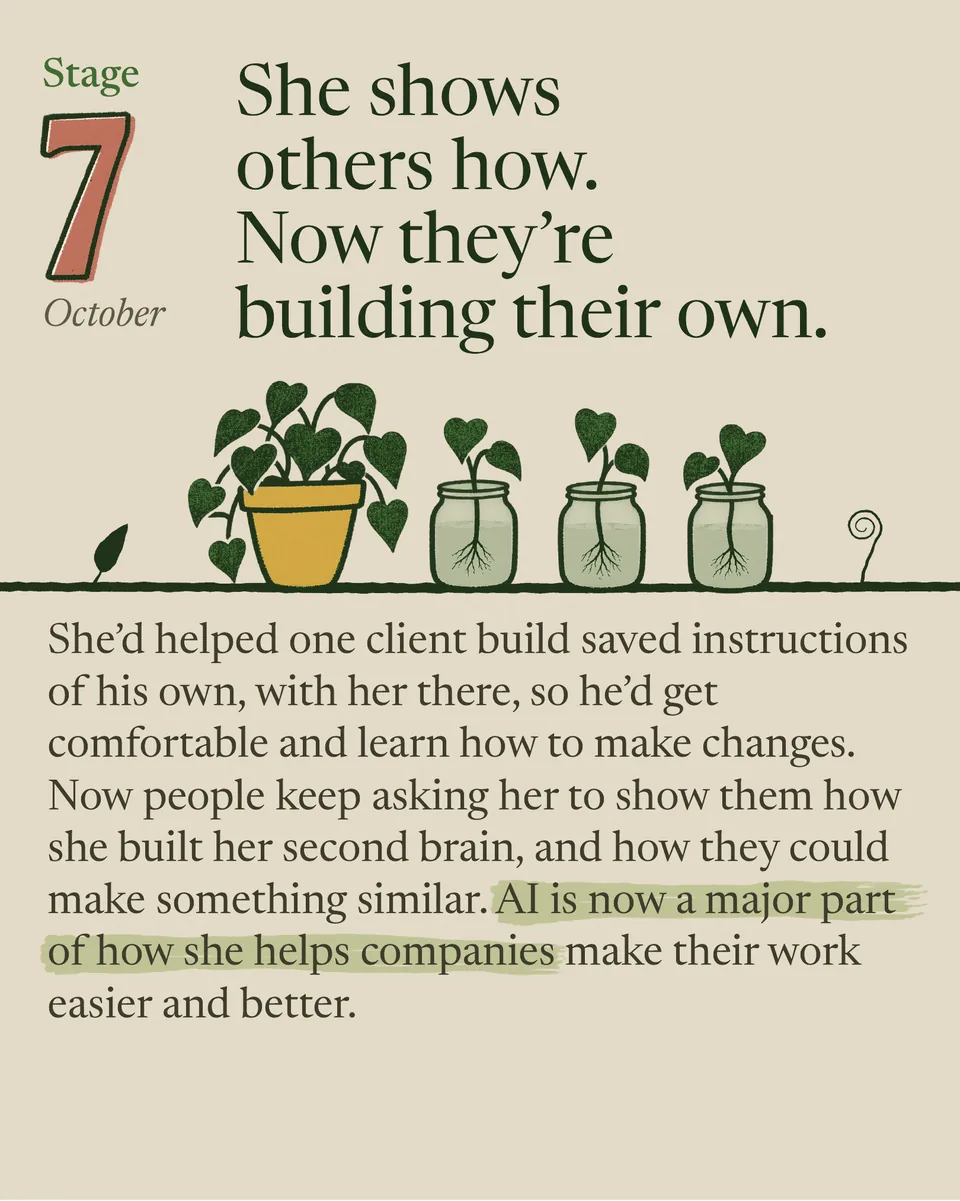
Page 1 of 13. How Danny got there. A tale of 7 months. The Society of AI Explorers • thewildedge.ai/sessions Page 2 of 13. “I felt like I was falling behind and didn’t know where to start to make sense of things.” — Danny Pancratz Page 3 of 13. Danny’s LinkedIn post from Oct 2, set as a clipping. Danny Pancratz, Support @ 1mind: I want to send some long overdue #gratitude to Seth Wylie for his transformational impact on my career over the past 7 months. If you’re a tech-savvy/curious business user looking for an “AI_coach” to help you make sense of this this fast-changing present-of-work (“future” crossed out), Seth is a godsend. What happened: Everyone was talking about AI and Claude on Linkedin (and really, everywhere). I felt like was falling behind and didn’t know where to start to make sense of things. 3 coaching sessions with Seth changed my life and career: A month later I was able to jump on an opportunity for my role at 1 mind. The meet up series he’s created with me, Carrie Mayfield, and others has been a weekly source of inspiration and continuous learning. Seth’s impact: I don’t get my job at 1mind without Seth’s inspiration and coaching (because I wouldn’t have been ready for it). I don’t have the success I’ve had at 1mind without the skills and understanding and curiosity that Seth helped me establish. I don’t have nearly the amount of fun I’m having innovating, creating, experimenting, and thriving in my role without both the foundation and ongoing peer group he’s helped me establish. #ai #community #artificialintelligence #futureofwork #curiosity #innovation Page 4 of 13. Stage 1, before March. He explains everything. Each chat starts from zero. Danny made some saved prompts, ran weekly AI office hours for colleagues, and figured out on his own that telling AI why works better than spelling out how. Page 5 of 13. Stage 2, April. He rambles. It remembers. Coaching began with Seth. Danny talked into his phone on long walks, just brain-dumping into a transcript, and the AI organized that into notes about him that it reads at the start of every chat. Each thing he adds to this ‘second brain’ makes every following chat better. It even makes those chats better at helping him add more new things. Page 6 of 13. Stage 3, May. He teaches it how his mind works. It knows when he needs a nudge. His files start to include tips that help it work for him, like reminding him to put aside a fun tangent for later when something else is due today. Jobs he repeats get saved as instructions that he can call up in any moment, and they get better every time he corrects them. Then it helped him prep for a job interview. “It helped me better understand myself to help me better represent myself,” he says. Page 7 of 13. Stage 4, June. He’s the new hire. It catches him up. His personal second brain wrote a brief to jump-start a new one, just for his new job, and company documents filled in all the other details. One brain is usually better than two, since everything in it helps with everything else, but a new job was worth the split. Page 8 of 13. Stage 5, August. He imagines. It builds. First, a dashboard for his habits (and who he’s due to catch up with). Then he spent a month listening to colleagues, wrote down what they needed, and in a week it built the system they now use to research new support tickets and track progress. Page 9 of 13. Stage 6, September. He thinks like an engineer now. It’s software written in plain English. It started getting messy: his system had written 1 rule in several different ways in several different places (and 1 of them contradicted the others). So he broke it down into specialized parts: each rule is written once, in one place, and one long chat keeps the plan and hands each task to a fresh chat. Now he can fix one part without redoing the rest. Page 10 of 13. Stage 7, October. He’s sharing it. It’s attracting contributors. Now he’s crafting it so it can run without him, on his days off and for people who aren’t him. His manager wants to be the first to try it, and engineers he works with offered to describe why their code is written the way it is, so that AI can do better research in the code. Page 11 of 13. “The biggest unlock for me was a change in the way of thinking and behaving. You’ve just got to start, because it’s actually the behavior and the mindset that lead to all of these discoveries and all the value.” — Danny Pancratz Page 12 of 13. A drawn trail with the seven stages. Most folks are here: at stage 1. 1, Good chats that start from zero, before March. 2, A second brain that remembers him, April. 3, Teaching it how his mind works, May. 4, A second one, just for work, June. 5, Having it build things, August. 6, Building it like software, September. 7, Making it the team’s, October. Page 13 of 13. The Society of AI Explorers. Come join us. thewildedge.ai/sessions
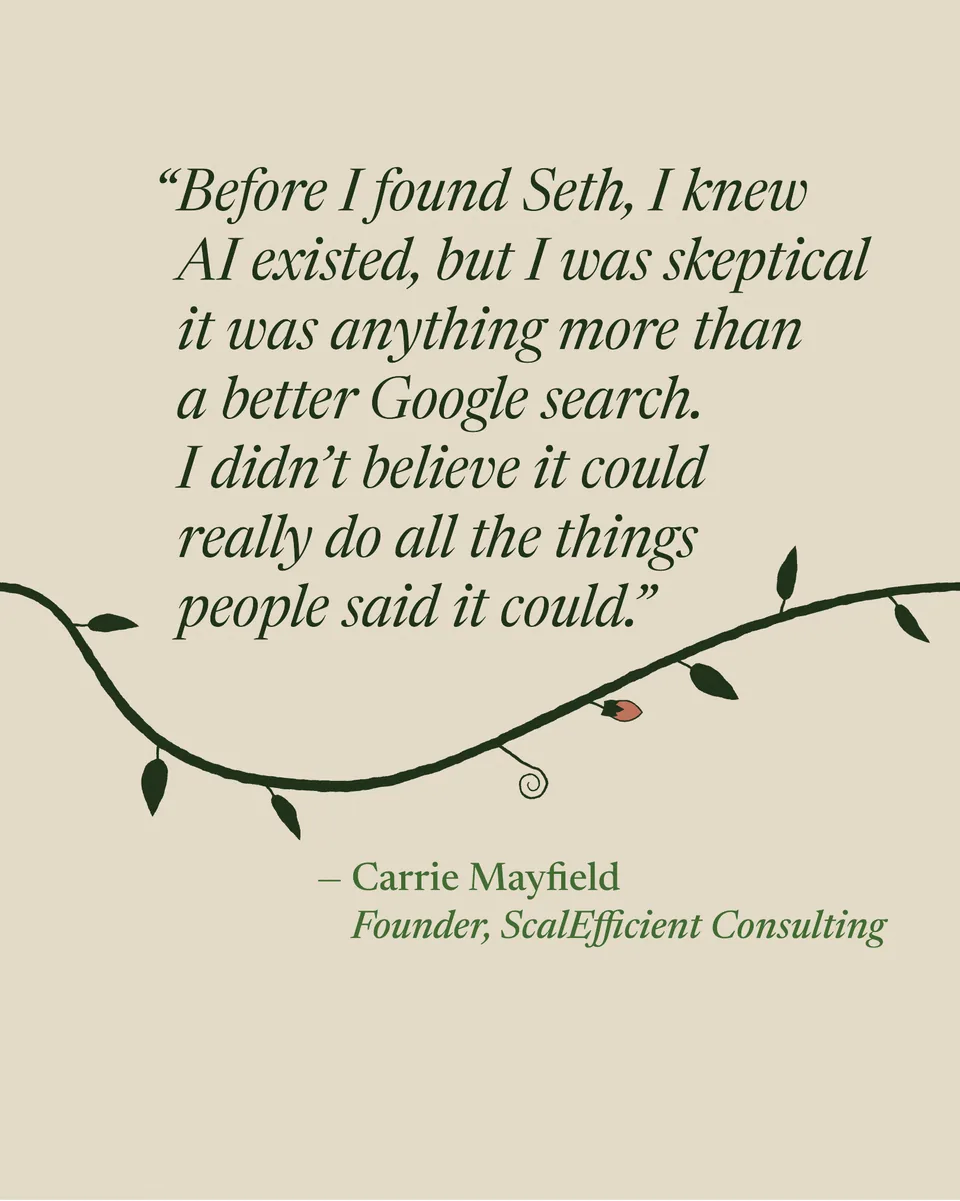
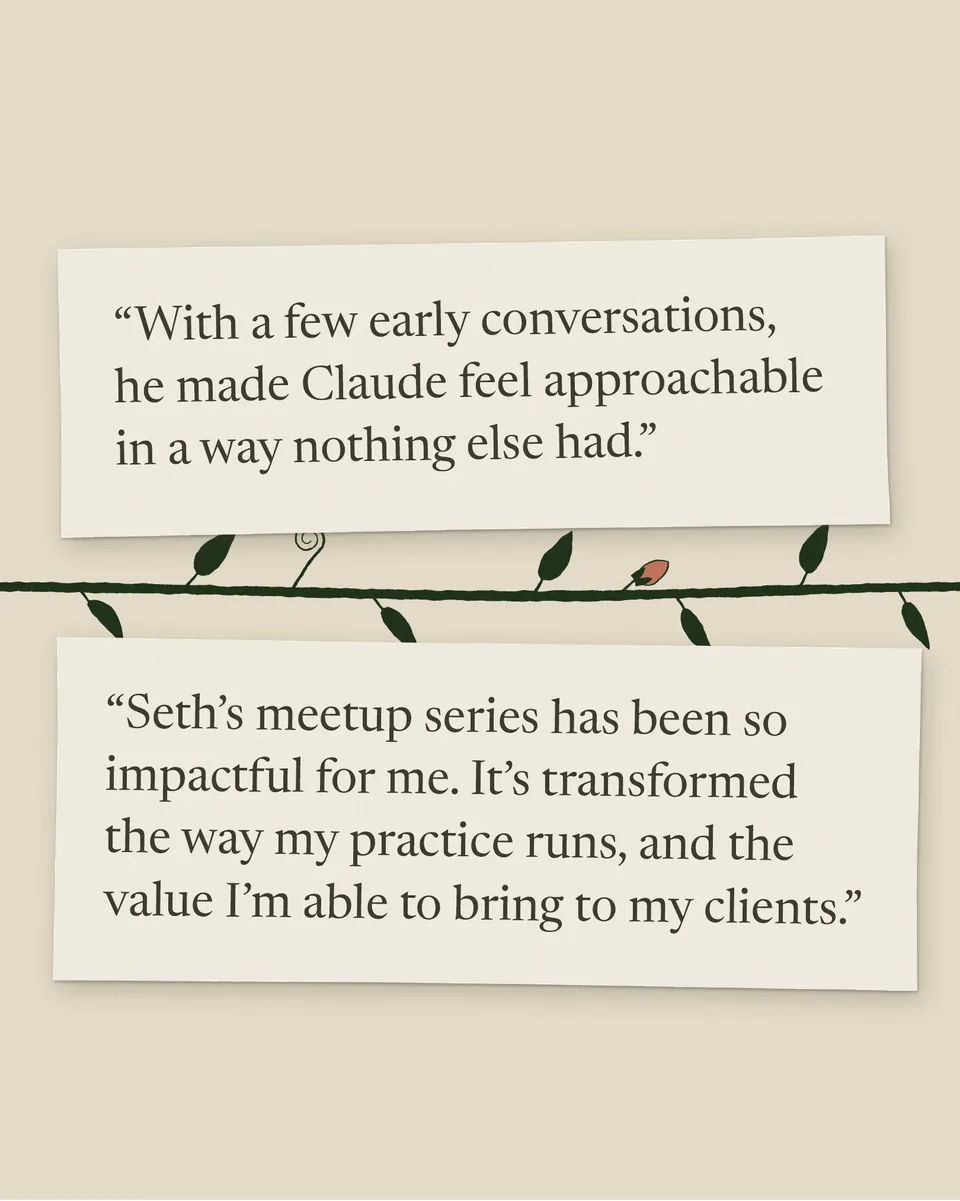
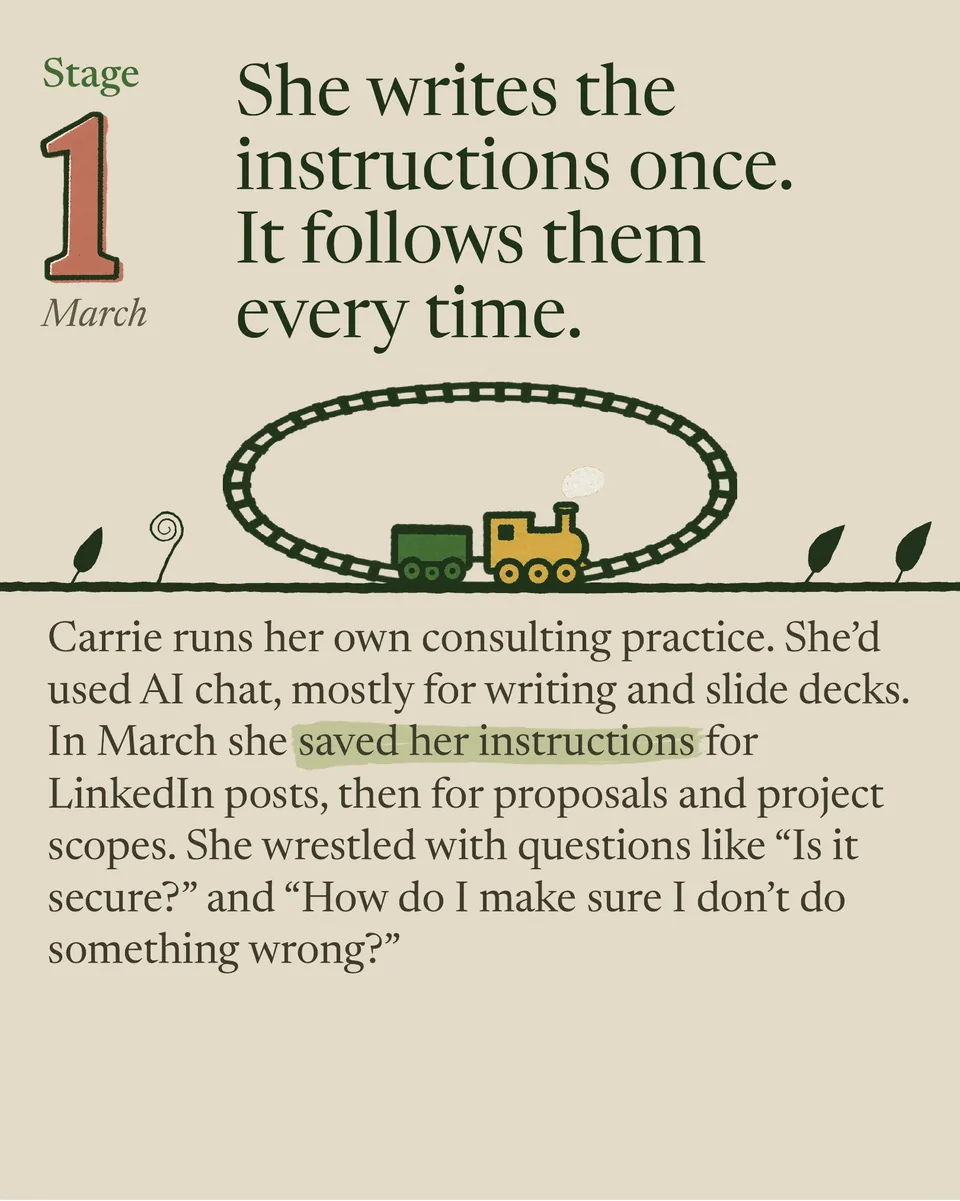
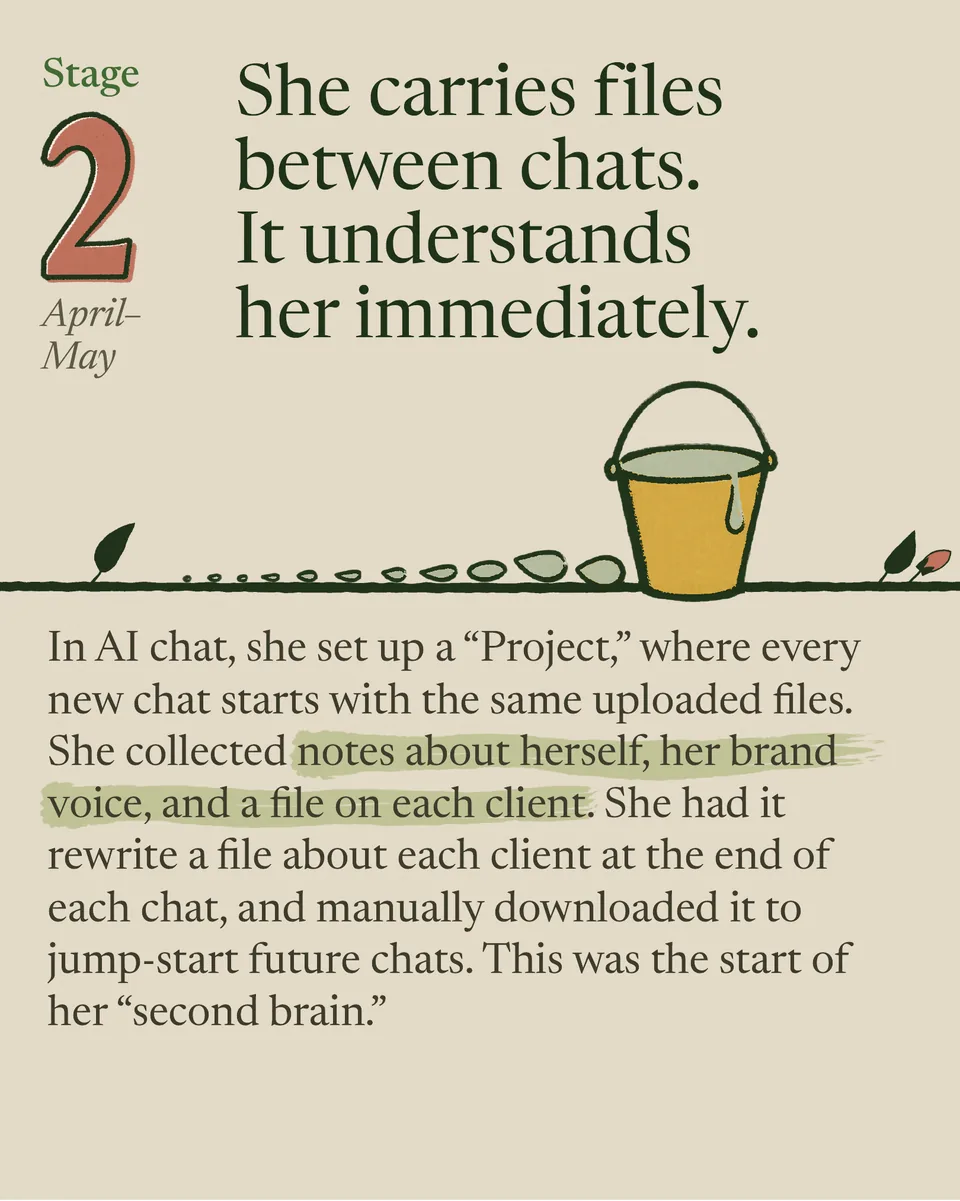
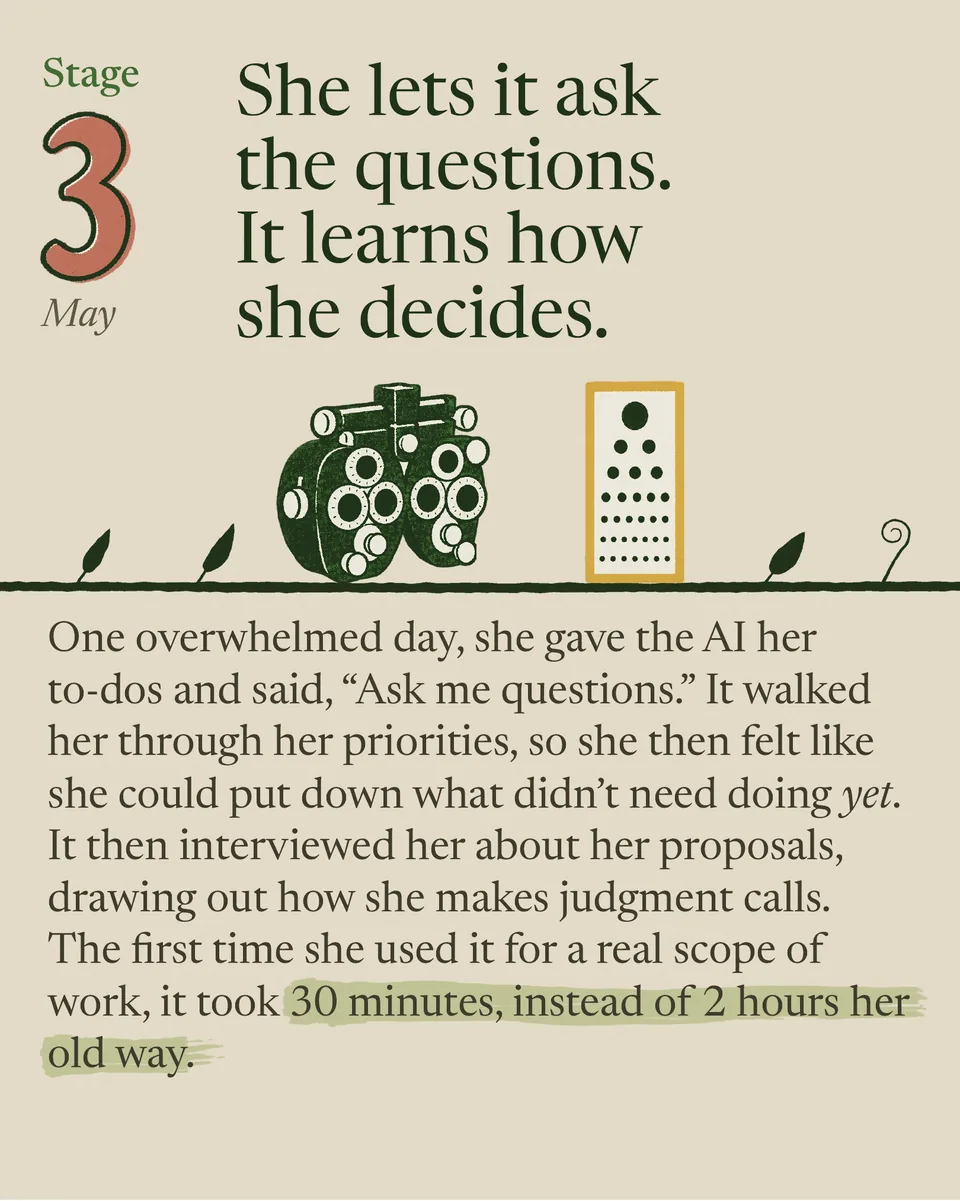
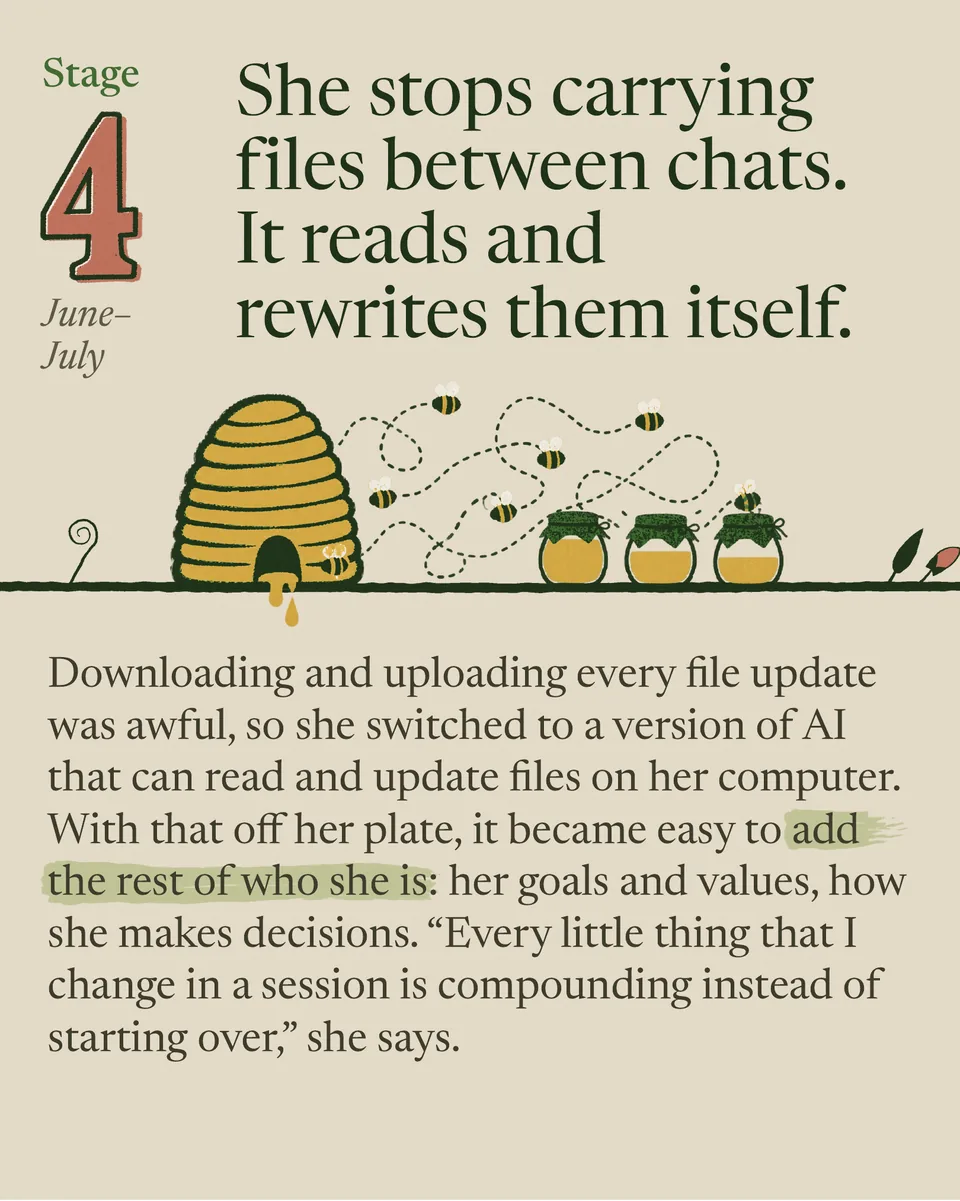
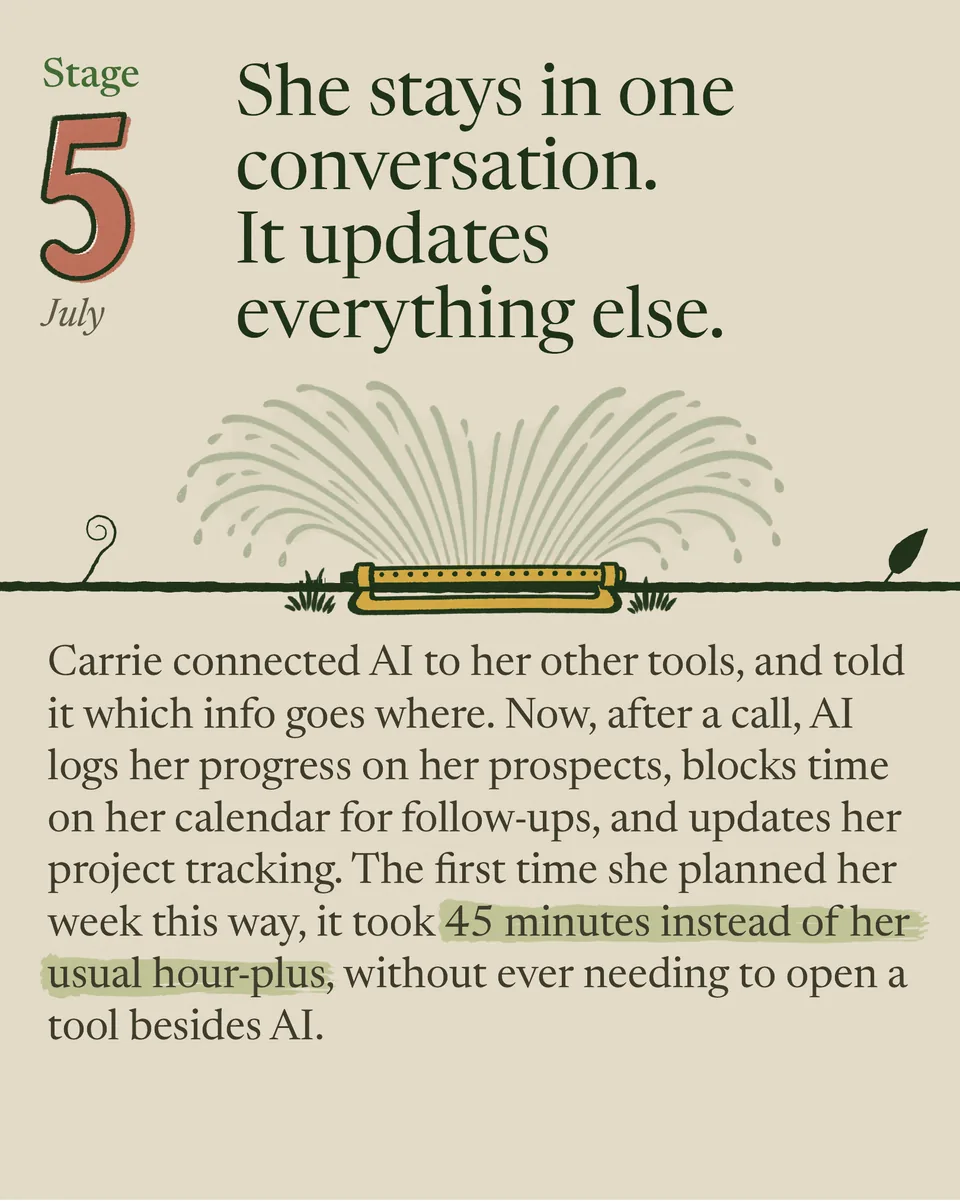
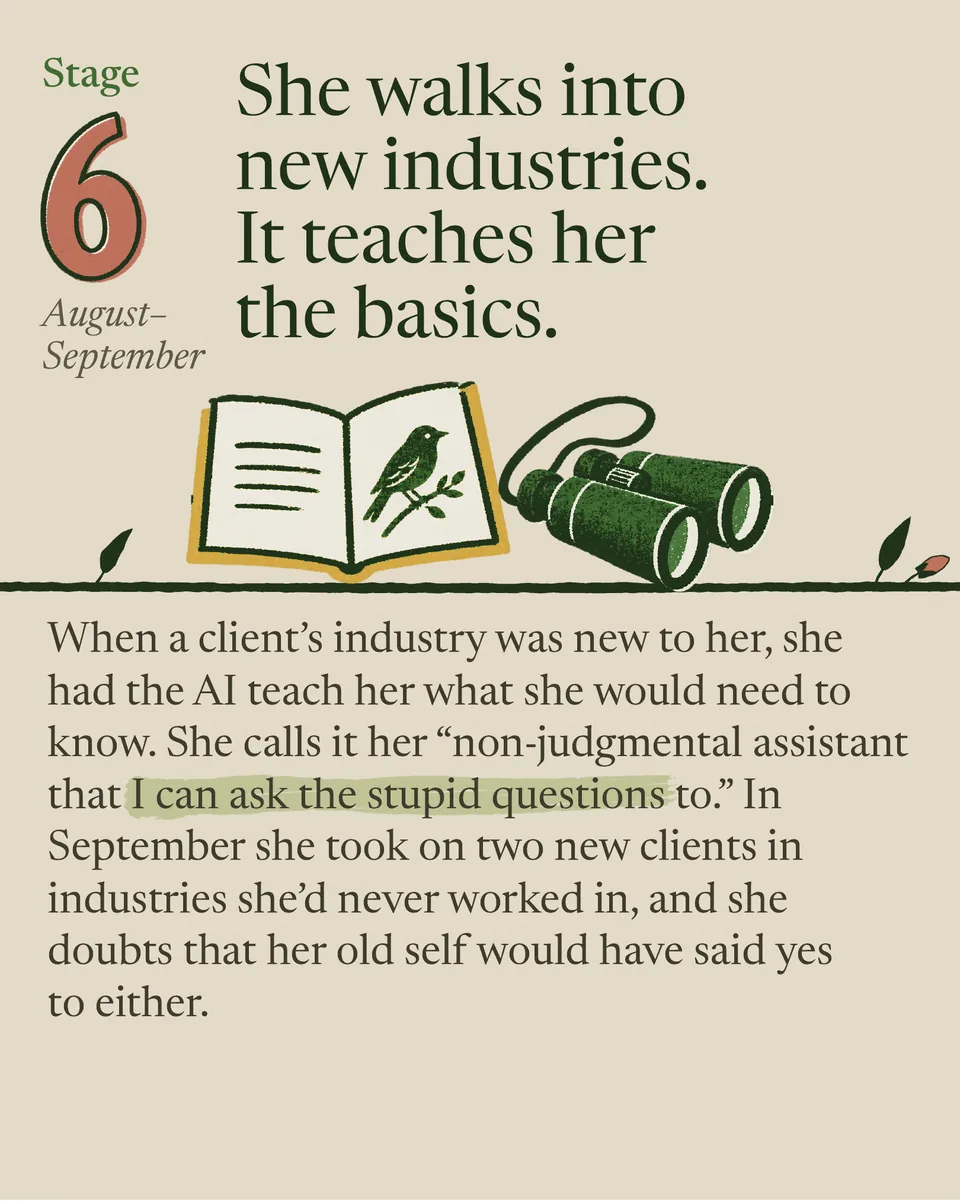
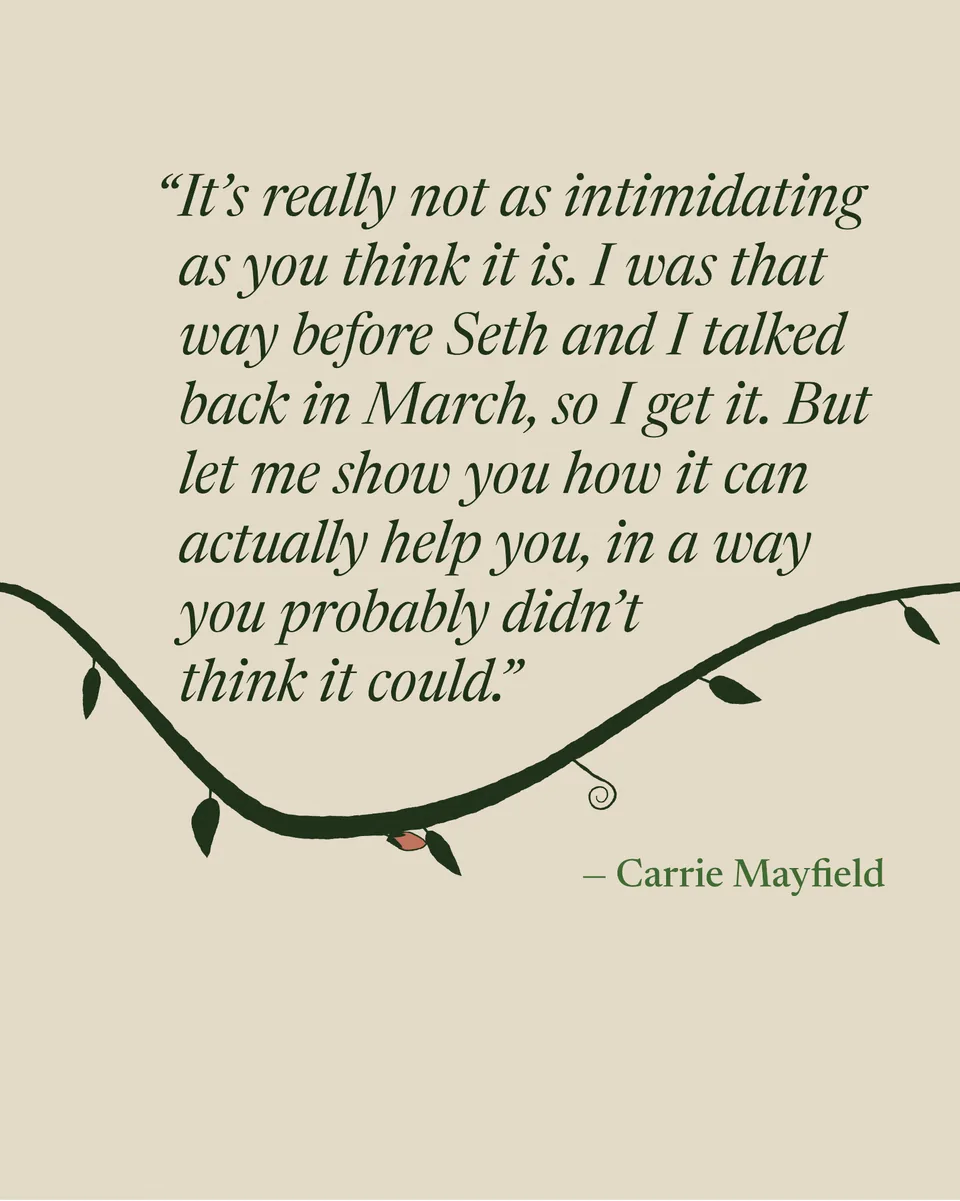
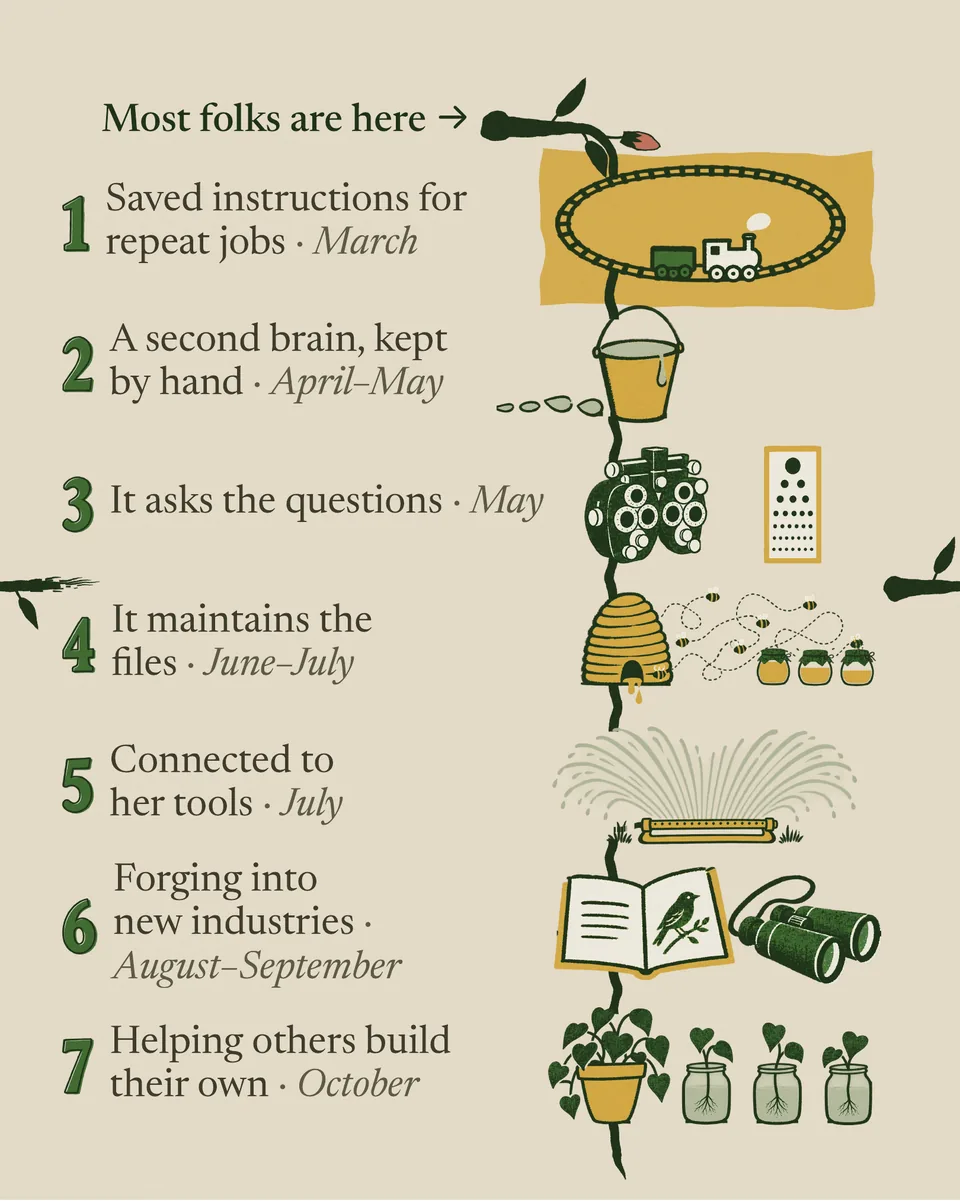
Page 1 of 13. How Carrie got there. A tale of 7 months. The Society of AI Explorers • thewildedge.ai/sessions Page 2 of 13. “Before I found Seth, I knew AI existed, but I was skeptical it was anything more than a better Google search. I didn’t believe it could really do all the things people said it could.” — Carrie Mayfield, Founder, ScalEfficient Consulting Page 3 of 13. Two of Carrie’s comments, set as paper clippings. “With a few early conversations, he made Claude feel approachable in a way nothing else had.” “Seth’s meetup series has been so impactful for me. It’s transformed the way my practice runs, and the value I’m able to bring to my clients.” Page 4 of 13. Stage 1, March. She writes the instructions once. It follows them every time. Carrie runs her own consulting practice. She’d used AI chat, mostly for writing and slide decks. In March she saved her instructions for LinkedIn posts, then for proposals and project scopes. She wrestled with questions like “Is it secure?” and “How do I make sure I don’t do something wrong?” Page 5 of 13. Stage 2, April–May. She carries files between chats. It understands her immediately. In AI chat, she set up a “Project,” where every new chat starts with the same uploaded files. She collected notes about herself, her brand voice, and a file on each client. She had it rewrite a file about each client at the end of each chat, and manually downloaded it to jump-start future chats. This was the start of her “second brain.” Page 6 of 13. Stage 3, May. She lets it ask the questions. It learns how she decides. One overwhelmed day, she gave the AI her to-dos and said, “Ask me questions.” It walked her through her priorities, so she then felt like she could put down what didn’t need doing yet. It then interviewed her about her proposals, drawing out how she makes judgment calls. The first time she used it for a real scope of work, it took 30 minutes, instead of 2 hours her old way. Page 7 of 13. Stage 4, June–July. She stops carrying files between chats. It reads and rewrites them itself. Downloading and uploading every file update was awful, so she switched to a version of AI that can read and update files on her computer. With that off her plate, it became easy to add the rest of who she is: her goals and values, how she makes decisions. “Every little thing that I change in a session is compounding instead of starting over,” she says. Page 8 of 13. Stage 5, July. She stays in one conversation. It updates everything else. Carrie connected AI to her other tools, and told it which info goes where. Now, after a call, AI logs her progress on her prospects, blocks time on her calendar for follow-ups, and updates her project tracking. The first time she planned her week this way, it took 45 minutes instead of her usual hour-plus, without ever needing to open a tool besides AI. Page 9 of 13. Stage 6, August–September. She walks into new industries. It teaches her the basics. When a client’s industry was new to her, she had the AI teach her what she would need to know. She calls it her “non-judgmental assistant that I can ask the stupid questions to.” In September she took on two new clients in industries she’d never worked in, and she doubts that her old self would have said yes to either. Page 10 of 13. Stage 7, October. She shows others how. Now they’re building their own. She’d helped one client build saved instructions of his own, with her there, so he’d get comfortable and learn how to make changes. Now people keep asking her to show them how she built her second brain, and how they could make something similar. AI is now a major part of how she helps companies make their work easier and better. Page 11 of 13. “It’s really not as intimidating as you think it is. I was that way before Seth and I talked back in March, so I get it. But let me show you how it can actually help you, in a way you probably didn’t think it could.” — Carrie Mayfield Page 12 of 13. A drawn vine with the seven stages. Most folks are here: at stage 1. 1, Saved instructions for repeat jobs, March. 2, A second brain, kept by hand, April–May. 3, It asks the questions, May. 4, It maintains the files, June–July. 5, Connected to her tools, July. 6, Forging into new industries, August–September. 7, Helping others build their own, October. Page 13 of 13. The Society of AI Explorers. Come join us. thewildedge.ai/sessions

Work with Seth

Seth also offers 1-on-1 coaching, corporate coaching and advisory, and group facilitation.

Let's talk: [email protected]